

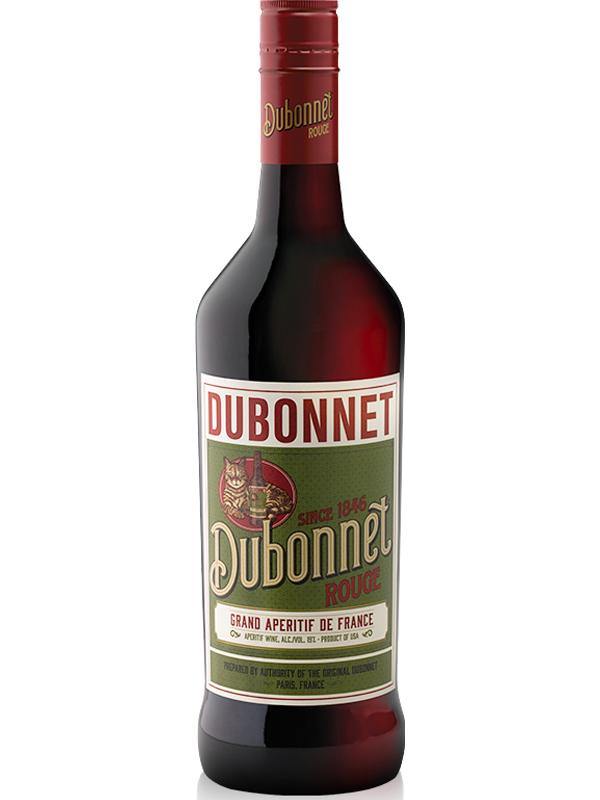
Dubonnet Rouge Grand Aperitif de France

Dubonnet Rouge is the original French aperitif — a 1-liter red-wine-based aperitif in the recipe first created in 1846 by Paris pharmacist and wine merchant Joseph Dubonnet. His challenge was to make quinine — the bitter cinchona-bark medicine French Foreign Legionnaires had to drink — palatable. His answer was to fold it into fortified wine with herbs, spices, and sugar, and a legend of the cocktail world was born.
The formula still centers on a base wine with herbs and spices — including black currant and tea essences, cinchona bark, and 100% cane sugar — for a profile that is medium-bodied, bittersweet, and endlessly mixable. This is the French bottling (about 15% ABV), presented in the vintage-inspired package with the famous cat of Sir Dubonnet's wife on the label. Chill it and serve over ice with a lemon twist, or mix the classic the Queen Mother made famous — Dubonnet with gin. It also belongs in any serious wine-lover's aperitif rotation and every well-stocked liqueur shelf.
Tasting notes: Deep ruby; dried herbs, blackcurrant, and a delicate citrus lift on the nose; silky and bittersweet on the palate — ripe dark fruit, orange peel, and subtle cocoa; a gently tonic, quinine-kissed finish.
Frequently asked questions:
What is Dubonnet? A French aromatized wine aperitif — fortified red wine infused with herbs, spices, quinine (cinchona bark), and sugar. It has been made since 1846.
Why was Dubonnet invented? To get French soldiers in North Africa to take their quinine. Joseph Dubonnet masked the bitterness in wine and botanicals — and accidentally created a cocktail classic.
How do you drink Dubonnet Rouge? Chilled, over ice, with a twist of lemon — or in cocktails. The most famous serve is the Dubonnet Cocktail: gin and Dubonnet with lemon.